

On 20 September, Granit Xhaka had little to say about the investigation into his Covid vaccination certificate. Asked about it after Sunderland’s defeat against Manchester City, he declined to comment and indicated that he had dealt with worse. By 21 September, Switzerland’s captain had acknowledged obtaining a false certificate, apologised and withdrawn from the national team’s international camp.
The investigation behind that reversal was considerably older. Police had searched a doctor’s practice in Lucerne in 2023, investigating suspected false vaccination documentation.
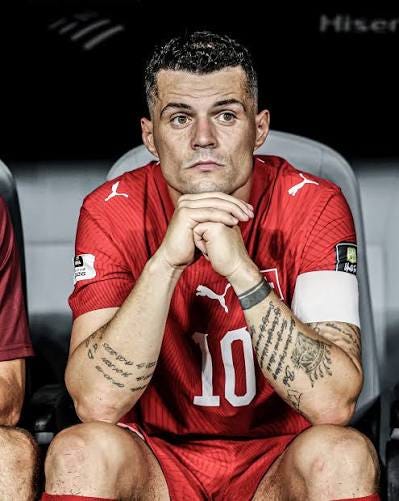
Granit Xhaka denies, then confesses
The doctor whose practice was searched is suspected of supplying false certificates to Xhaka and others. Before his admission, her lawyer told the press that she had vaccinated the footballer in January and November 2022.
Xhaka had publicly declared himself vaccinated in March of that year, joking to media that journalists would have nothing more to write about. When the investigation emerged this September, he initially denied the allegations.
His subsequent statement offered a different explanation. Describing his fear and distrust of the vaccine, Xhaka acknowledged buying a certificate instead of addressing his concerns through the proper channels. He apologised, accepted responsibility and promised full cooperation with the authorities. The doctor’s denial remains part of a case in which investigators must establish how the documentation was obtained and who was responsible.
The available reporting does not explain why it took over three years for the allegations came to light.
However, prosecutors are examining possible document forgery or the fraudulent procurement of a false official certification, and Xhaka is expected to be questioned in early October.
The Swiss Football Association could not afford to wait. federation could not postpone every decision until then. Xhaka agreed that he would miss the upcoming international camp, with the situation to be reassessed after the international window. FA President Peter Knäbel welcomed Xhaka’s confession, but it remains to be seen if this allows him to continue on as captain.
Asked about it on 21 September, Knäbel was already walking back from the edge. He told SRF that Xhaka had not needed the certificate to participate in internationals or a tournament. The football association had recommended vaccination, rather than required it.
He also offered a striking defence of Xhaka’s response. Asked whether someone convicted of document forgery could remain national captain, Knäbel said the midfielder had “shown how a captain should react”.
Five months earlier, Switzerland’s ice hockey federation faced a similar decision about the national coach.
Patrick Fischer hid the truth, then volunteered it
Patrick Fischer wanted to coach at the 2022 Beijing Winter Olympics without being vaccinated. He later explained that quarantine would have interfered with preparing his team. He bought a certificate through Telegram, falsely recording two vaccinations, and travelled to China in February 2022.
Lucerne prosecutors convicted him of document forgery the following year and imposed a monetary penalty of CHF38,910. The case was resolved through a written summary penalty order, without a public trial. His conviction remained out of the headlines, and he continued coaching.
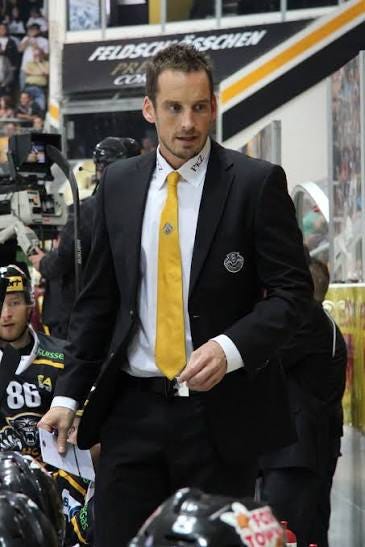
His employer was the Swiss Ice Hockey Federation, which had to make its own decision about his position. According to Fischer, neither the federation nor Swiss Olympic knew he had used a false certificate. He said he had paid the penalty. The criminal case was over before the sporting scandal began.
According to SRF journalist Pascal Schmitz, it was Fischer himself who blabbed. Schmitz was preparing a profile ahead of Switzerland’s home ice hockey world championships in 2026. During a lunch break, with a camera colleague and the federation’s media chief present, Fischer volunteered the story of the false certificate.
Schmitz subsequently obtained the prosecution order on public-interest grounds and confronted Fischer and the federation with its contents. Fischer apologised publicly on 13 April, but later accused SRF of using a conversation he considered confidential.
The disagreement concerned when confidentiality had been agreed and what it covered. Fischer maintained that the lunch conversation was off the record. SRF said no such agreement existed beforehand: the federation’s media chief requested confidentiality afterwards. The broadcaster said it respected that request by withholding quotations from the conversation and initially not identifying Fischer as its source. It nevertheless pursued the tip, obtaining the official document on which it based its reporting.
The federation initially stood by Fischer. President Urs Kessler said he had recognised his mistake and already borne the consequences. Swiss Olympic was less accommodating, saying he had deceived the organisation and exposed the Swiss delegation to risk. Sponsor Ford also called his conduct unacceptable.
On 15 April, the federation dismissed him with immediate effect. Kessler acknowledged that its initial assessment had been too narrow: the conclusion of the criminal case had not resolved the damage to trust. Jan Cadieux, already appointed to succeed Fischer after the world championships, took over before the tournament.
In September, the International Ice Hockey Federation imposed a four-year suspension from national-team coaching, which Fischer has appealed. Unless overturned, the certificate he bought to get him to the 2022 Olympics will keep him from coaching a national team until 2030.