

Manchester City were not found guilty of 115 different financial schemes. They were found guilty over a smaller number of arrangements that generated more than 100 breaches of Premier League rules across almost a decade.
On 29 September, an independent Premier League commission found that City had repeatedly presented a financial picture that did not reflect how hundreds of millions of pounds were actually entering and leaving the club. Owner funding was recorded as sponsorship income. Costs connected to managers and players were kept outside City’s accounts. An image-rights arrangement increased reported income while reducing expenditure. The Premier League says the distortions exceeded £900 million.
Those findings also changed the calculations used to test City against football’s spending rules. Once the commission recalculated the club’s finances, it found breaches of UEFA financial regulations and the Premier League’s own profitability and sustainability rules. City was separately found to have failed to cooperate fully with the investigation that began in December 2018, although one of the four main cooperation allegations was not proved.
The Premier League’s 2023 referral applied overlapping duties across successive seasons between 2009/10 and 2017/18. One financial arrangement could therefore produce several breaches: one in the accounts, another when those accounts were submitted, and further breaches when the same figures were used to assess compliance with spending limits. The published decision organises the case into four principal charges and a series of subcharges, rather than 115 unrelated episodes.
Manchester City disputes the findings and has appealed. Punishment is being considered separately.
So what, exactly, has Manchester City been found guilty of doing?
TLDR:
City recorded hundreds of millions of pounds supplied by its owner as sponsorship income. The commission found that of £949.94 million recorded from Abu Dhabi sponsors, £830.69 million was actually funded by ADUG, Manchester City’s owner.
City failed to disclose the full amount it was paying manager Roberto Mancini. The commission found £8.866 million of ADUG-funded payments that belonged among City’s own costs, including remuneration paid through a separate Abu Dhabi consultancy arrangement.
City failed to disclose £7.4 million in remuneration and image-rights payments for a player. Those payments should have appeared both in the player’s contract and in City’s accounts. The published decision redacts the player’s identity, although earlier reporting linked the allegation to Yaya Touré and his agent Dimitri Seluk.
City kept another £500,000 liability out of its accounts through a consultancy agreement. ADUG paid a debt that the commission found actually belonged to City; the individual involved remains redacted.
City used the Fordham image-rights arrangement to make its finances look better from both directions. It recorded £24.5 million as operating income that the commission found should have been treated as owner funding, while leaving £49.414 million of City’s image-rights costs outside its operating expenses.
City failed to disclose that important sponsorship agreements involved related parties. The commission found that the accounts did not properly reveal the connections behind the deals, information needed to understand how independent and commercially valuable those sponsorships really were.
Once those figures were corrected, City failed UEFA’s Financial Fair Play rules for five consecutive seasons. The commission found substantial breaches from 2013/14 through 2017/18.
City also breached the Premier League’s own spending limits in three consecutive seasons. After removing income and restoring costs that the commission said had been wrongly accounted for, City exceeded the permitted losses in 2015/16, 2016/17 and 2017/18.
City obstructed parts of the Premier League investigation. The commission found that the club failed to cooperate fully after the investigation began in December 2018, although the Premier League did not prove every cooperation allegation it brought.
1. Manchester City recorded owner funding as sponsorship income
A sponsorship payment and an investment by a club’s owner can both put money into the club. They do not count in the same way. Commercial sponsorship can be treated as income for the financial tests applied to clubs; an owner’s capital contribution cannot simply be presented as money generated by the business. The commission’s finding turned on the source of the money City received and how it was recorded.
The commission found that City devised a disguised funding scheme in early 2010. Abu Dhabi sponsors would agree to provide only part of the sum appearing in their sponsorship contracts. The balance would come from Abu Dhabi United Group Investment & Development Ltd, or ADUG, the club’s owner. City then recorded the full contractual amount as sponsorship revenue. The commission found that the accounts did not reflect who had actually supplied the money.
Across the nine seasons examined, City recorded £949.94 million in Abu Dhabi sponsorship revenue. The commission attributed £119.25 million to the sponsors themselves and £830.69 million to ADUG. City disputes those findings.
The commission described the relevant sponsorship agreements as shams, but did not rely on that conclusion alone. Even if the contracts were legally valid, it found that the owner-funded portion still had to be accounted for according to its economic substance. Money supplied by the owner did not become commercial sponsorship merely because it passed through an agreement bearing a sponsor’s name.
City submitted financial information to the Premier League season after season. The same funding arrangement therefore generated repeated breaches as the club continued to file accounts that the commission found misstated its revenue. It also found that City had breached its obligation to act in utmost good faith.
2 City failed to disclose millions of pounds it owed its manager, a player and others
The commission found three separate arrangements in which Abu Dhabi United Group paid liabilities that belonged to Manchester City, while the corresponding costs stayed out of the club’s accounts. Together they involved £16.766 million: £8.866 million connected to City’s manager at the time, Roberto Mancini, £7.4 million connected to a player’s remuneration and image rights, and a further £500,000 liability recorded through a consultancy agreement.
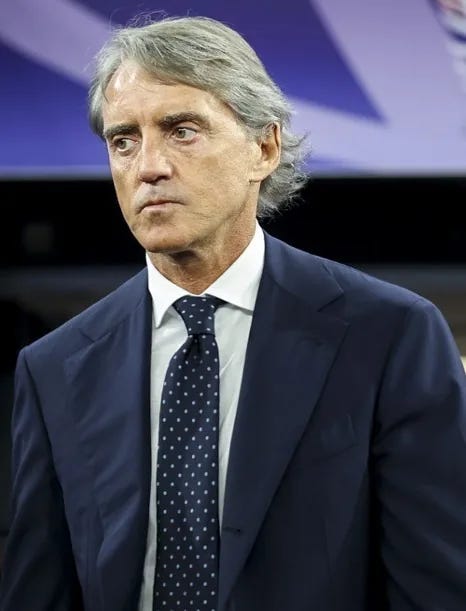
Roberto Mancini
Roberto Mancini’s case is the clearest example of what the Premier League said Manchester City was doing with remuneration because the arrangement was, in effect, split in two.
Mancini became City manager in December 2009. Manchester City paid him a reported basic salary of £1.45 million a year, before bonuses. At the same time, he had a second contract with Abu Dhabi club Al Jazira, worth another £1.75 million a year. For that second sum, the consultancy agreement required a minimum of just four days’ work annually.
The two jobs therefore looked very different on paper. Mancini was being paid £1.45 million to manage Manchester City through an entire Premier League season, while an Abu Dhabi club controlled, like City, by Sheikh Mansour bin Zayed Al Nahyan was paying him even more for a handful of consultancy days. The commission ultimately concluded that this was not really two economically separate jobs. The Al Jazira money was part of what it cost to employ Mancini at Manchester City.
Even the route taken by the money pulled the arrangement back towards City. Mancini did not initially sign the consultancy agreement in his own name. It was made through Sparkleglow Holdings Ltd, a Mauritius-registered company. But documents subsequently examined by Tax Policy Associates indicate that ADUG supplied the money behind the Al Jazira payments, while at least one Sparkleglow payment was made from a Manchester City bank account and authorised through City’s finance operation.
Nor did negotiations over the consultancy remain at arm’s length in Abu Dhabi. When Mancini’s lawyer sought changes to the arrangement in 2011, she dealt with Manchester City chief executive Garry Cook, rather than Al Jazira. The same documents show Cook discussing an additional payment connected to Mancini’s Italian tax position and treating the consultancy payment as part of Mancini’s wider compensation. The structure was later changed again, with payments moving from Sparkleglow to Italy International Services srl, an Italian company connected to Mancini’s lawyers.
By then, the distinction between “Manchester City salary” and “Al Jazira consultancy” had become increasingly difficult to sustain. City’s published accounts recorded the cost of the first contract. They did not record the second as a City expense, while the manager’s contract submitted under Premier League rules did not disclose it as part of his remuneration.
The independent commission, whose public decision redacts Mancini’s name, found £8.866 million in ADUG-funded payments across the four seasons covered by the manager-remuneration charge. It concluded that those payments were liabilities belonging to Manchester City and should therefore have appeared both in City’s accounts and, where required, in the manager’s employment terms. The commission called the underlying agreements shams. It also reached the same result without relying on that description: whatever the contracts said, their economic substance was that ADUG was paying part of Manchester City’s own bill.
That meant City had understated the cost of employing its manager for four consecutive seasons. It also meant the contract lodged with the Premier League did not show the full remuneration package that the commission found Mancini was receiving in connection with his City employment.
Mancini himself was not charged in the Premier League proceedings, and the commission did not make a finding of misconduct against him personally. When asked about the arrangement before the decision was published, he acknowledged the existence of the “double contract” but said any problem with it was Manchester City’s responsibility.
For City, however, the commission’s conclusion was much harder to compartmentalise: part of the cost of employing the manager who delivered the club’s first Premier League title had been paid through another Sheikh Mansour-controlled club and kept out of Manchester City’s disclosed remuneration and expenses. City rejects that finding and has appealed.
Yaya Touré (probably)
The commission does not name the player involved. But it does give us the dates: the arrangement ran for six seasons, from 2010/11 to 2015/16, beginning in the same season that Yaya Touré arrived from Barcelona and became one of the defining players of Manchester City’s rise.
Touré is not simply a convenient guess from the team sheet. When the Premier League brought its charges in February 2023, The Guardian reported that an allegation involving Touré’s then agent, Dimitri Seluk, and secret payments from City was understood to be among them. Seluk represented Touré throughout the period covered by the charge.
The commission has now found that an unnamed player arrangement involved £7.4 million supplied by a company named ADUG to meet liabilities that actually belonged to Manchester City. Those payments included remuneration and image-rights money that should have appeared in the player’s City contract. The corresponding expense should also have appeared in City’s accounts.
Image rights allow a footballer’s commercial value to be separated from his salary. A club can pay a player for playing football and separately pay for the right to exploit his name, image and commercial appeal. There is nothing inherently improper about that. The problem found by the commission was that the money was part of City’s financial obligation to the player while being paid outside the remuneration City disclosed.
The commission concluded the very agreements used to structure the payments were shams.
Seluk denied that anything had been hidden. Asked in 2023 whether City had made secret payments to him while he represented Touré, he said everything was transparent and said Touré had paid the required tax. He also said he would give the same account to the independent commission if asked.
Touré and Seluk have not been charged.
£500,000 hidden in a consultancy agreement
The third remuneration arrangement involved less money, but followed the same pattern. Manchester City owed £500,000 to an unnamed individual. ADUG paid it instead, while the cost appeared in a consultancy agreement between other parties rather than as an expense in City’s accounts.
The commission found that the consultancy agreement was a sham. City was the party that really owed the £500,000, ADUG had discharged that liability on its behalf.
Even if the consultancy agreement was legally genuine, its economic substance was unchanged: City had incurred a £500,000 cost, somebody else had paid it, and the expense had disappeared from the club’s reported figures.
The commission found that City consequently understated its expenditure for the season involved. It also concluded that the club knew its accounts did not give a true and fair picture of its finances, or was reckless as to whether they did, contributing to the finding that City had breached its duty to act in utmost good faith.
Unlike the Mancini arrangement, however, the published decision gives almost nothing from which the person can safely be identified. It redacts the individual who received the money, the other party to the consultancy agreement and even the season in which the payment was made. The detailed evidence sits in Appendix 18, which has not been published.
Across the three remuneration arrangements, the commission found £16.766 million of costs that belonged to City but were paid by ADUG and left outside the club’s reported expenditure.
3 City used Fordham to book £24.5 million as income while leaving £49.4 million of costs outside its accounts
The Fordham arrangement did something the earlier remuneration schemes did not. It improved Manchester City’s reported finances from both directions at once.
City had agreements giving it rights over the commercial use of its players’ images. In 2012, as part of a wider initiative called Project Longbow, the club began restructuring those rights. The idea behind Longbow was broader than Fordham and the commission accepted that much of the project was legitimate. The problem was the particular structure ultimately used for the image-rights business.
Fordham acquired City’s interests in its players’ image rights. City then recorded £24.5 million from the arrangement as operating income.
That made the transaction look like City had sold a valuable commercial asset to an outside business and earned £24.5 million from doing so.
The commission found something very different had happened.
ADUG, Manchester City’s owner, was funding the arrangement. The £24.5 million City recorded as commercial income should instead have been treated as an owner contribution. The sale had therefore allowed money originating with City’s ownership to appear in the accounts as money generated by the club’s business.
The other half of Fordham was even larger.
Players continued to be owed payments for their image rights. City treated Fordham as having taken those liabilities with the rights it had acquired. The commission disagreed. It found that £49.414 million in image-rights costs remained obligations belonging to Manchester City and should therefore have appeared among the club’s operating expenses.
Fordham consequently transformed City’s accounts twice. A transaction funded by the owner produced reported operating income, while almost £50 million of costs that the commission regarded as City’s own disappeared from operating expenditure.
Put those two findings beside each other and the attraction of the structure becomes obvious without needing to speculate about anyone’s motives. City’s reported revenue went up. Its reported costs went down. Both movements improved the financial numbers on which football’s spending rules would later operate.
The commission traced Fordham back to Project Longbow, launched in the third quarter of 2012 as City looked for ways to increase revenue and reduce losses. That context has to be handled carefully. Longbow was not itself found to be some giant fraudulent project. The commission expressly accepted that many of the ideas developed through it were legitimate commercial exercises. Fordham was the part it found crossed the line.
The club’s legal and commercial machinery also mattered. Fordham was not a loose payment arrangement of the kind seen with Mancini. It was a corporate structure designed to move a whole category of commercial rights and liabilities away from City. That made it potentially more consequential: instead of concealing one person’s remuneration, it altered how a sizeable part of the club’s image-rights business appeared in the accounts.
The commission ultimately found inaccurate accounting and a breach of City’s duty of utmost good faith. City disputes those conclusions.
4. City didn’t disclose key sponsorship deals that involved related parties
Charge 1(D) asked another question: what did Manchester City tell anyone reading its accounts about the relationships behind those sponsorship deals?
Not enough, according to the commission.
Accounting rules require companies to identify certain transactions involving people or organisations connected to them. A sponsorship deal negotiated with a genuinely independent company is different from one involving a company connected to the club’s ownership. That does not automatically make the second deal improper, but it changes how somebody assessing the accounts should understand it.
The commission found that City’s relevant sponsorship agreements were related-party transactions. City’s accounts either failed to disclose those relationships or failed to explain them sufficiently for readers to understand their financial effect.
That is more consequential than a missing footnote.
City’s sponsorship income was one of the central measures of how rapidly the club had grown commercially after Sheikh Mansour’s takeover. The accounts presented sponsorship agreements as revenue generated through City’s commercial business.
If the sponsor was connected to the ownership, anyone judging the independence, value or substance of that revenue needed to know.
City’s state of mind produced a separate finding. The commission concluded that the club knew the required disclosures were missing, or was reckless as to whether they were, contributing to another breach of its obligation to act in utmost good faith.
The sponsorship findings therefore operate on two levels. City was found to have misrepresented the source of hundreds of millions of pounds, and separately to have failed to disclose relationships that would have helped readers understand the nature of the deals generating that supposed commercial revenue.
City is appealing both findings.

5. It repeatedly failed UEFA’s spending rules
Between 2013/14 and 2017/18, Premier League rules required City to comply with UEFA’s financial regulations as a condition of membership. The league charged City with breaching that obligation in five consecutive seasons.
At the time, UEFA’s Financial Fair Play system revolved around a break-even calculation. Clubs could spend heavily, but their relevant football income and expenditure had to remain within prescribed losses over a monitoring period.
Manchester City’s published figures showedone financial position. The commission’s findings produced another.
The commission removed sponsorship income that it concluded was actually owner funding. It restored remuneration and image-rights expenses that City had left outside the accounts. It reversed the accounting treatment of Fordham. It then applied UEFA’s break-even rules to the revised figures.
City failed, by what the commission described as substantial amounts in every one of the five seasons charged.
Because the sponsorships involved related parties, the commission concluded that their value would have to be adjusted to fair market value. Once it made those adjustments, City still failed UEFA’s financial requirements.
This charge is sometimes blurred with the UEFA case that ended at the Court of Arbitration for Sport in 2020. They are not the same proceeding.
6. City breached the Premier League’s spending limits in three consecutive seasons
The Premier League’s Profitability and Sustainability Rules, or PSR, limited the losses a club could record over a rolling three-year period. The relevant threshold was £105 million, although that figure was calculated from adjusted earnings rather than simply measuring how much money a club spent on transfers.
Using Manchester City’s reported accounts, the club appeared to remain within the relevant limits for 2015/16, 2016/17 and 2017/18.
The commission’s findings:
- removed sponsorship income that it had found was actually funded by ADUG;
- restored remuneration and image-rights costs that belonged to City but had been paid elsewhere;
- reversed the accounting treatment of Fordham.
When those corrected figures were run through the Premier League’s financial rules, the commission found that City had exceeded the permitted losses by substantial amounts in all three charged seasons.
7. City obstructed parts of the Premier League investigation
The final part of the case concerns what City did once the league started trying to find out what had happened.
The investigation began in December 2018, after the publication of internal City material by Der Spiegel and Football Leaks, and continued until the Premier League referred the case to an independent commission in February 2023.
Premier League clubs are required to provide documents, information and assistance when the league investigates suspected rule breaches. The commission found that City did not fully comply with those obligations and had attempted to frustrate parts of the investigation.