UEFA is preparing to lift its boycott of FIFA competitions, less than a month after all 55 European associations agreed that their national teams would stay away.
This averts the immediate confrontation of a civil war between FIFA and its richest confederation.
At a meeting in Monaco on 27 August, UEFA will tell its member associations that FIFA has met the conditions for ending the boycott and that UEFA members will participate in the U-20 Women’s World Cup in Poland, beginning on 5 September.
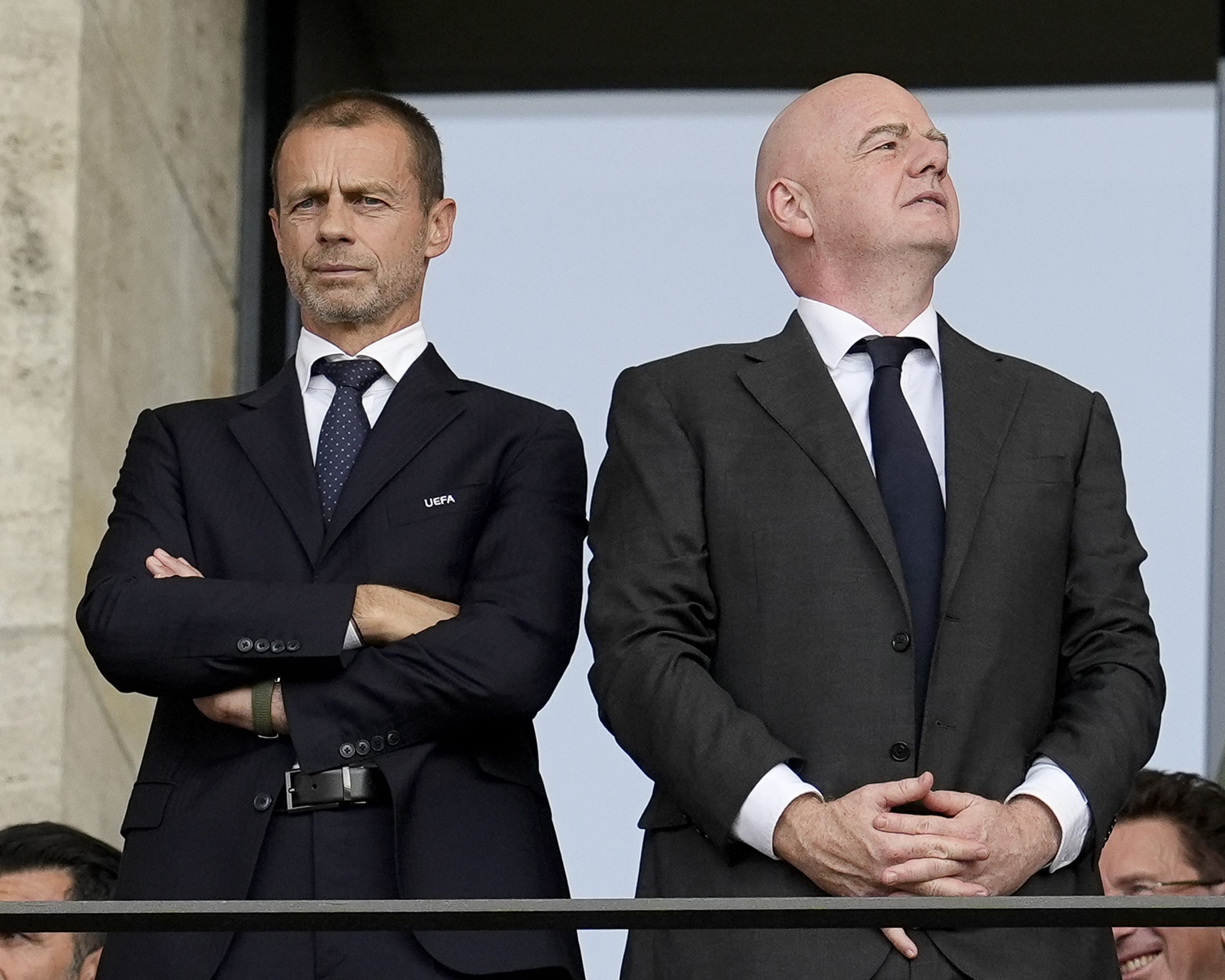
But among online discussions, this decision is being equated to letting Infantino off the hook. In recent days, UEFA and Concacaf had discussed a joint Nations League, outside FIFA’s jurisdiction. which would move more international matches and their commercial rights under the control of the regional bodies.
Infantino, meanwhile, seemingly crashed a visit to the Caribbean Football Union in the Dominican Republic to promote a new Under-15 World Cup open to all 211 FIFA associations. Concacaf president Victor Montagliani had asked Infantino not to attend, warning that his presence would distract from a youth tournament taking place there.
UEFA’s boycott must be understood in the right context.
And the campaign to remove Infantino is still very much alive. On 26 August, the Italian and Romanian football federations announced they would not support Infantino in the March 2027 FIFA presidential election.
How Did FIFA Get UEFA to Lift the Boycott?
The news and controversies surrounding Infantino have moved so quickly over the last month on 30 July that we may need a refresher on what UEFA’s boycott actually meant.
It came as a direct response to FIFA Forward Enterprise (FFE), Infantino’s plan to transfer the commercial rights to the World Cup and other FIFA competitions into a new company and sell around 20% of it to private investors.
Infantino Strong-Arming Members Into Approving His $20 Billion Company by September 19
On July 19, Debbie Hewitt watched the World Cup final alongside Gianni Infantino.
All 55 UEFA associations agreed that their national teams would stay out of FIFA competitions until two conditions were met.
First, FIFA had to abandon FFE completely. Second, it had to provide binding assurances that it would not return with another plan to open its competitions or governance to private ownership.
Infantino withdrew FFE the following day, admitting that it was “causing division”. But UEFA kept the boycott in place.
Essentially, it feared Infantino could return next year with a similar plan under a different name.
FIFA has now reportedly provided written assurances that FFE, or a similar attempt to sell ownership interests in its competitions, will not return.
Those assurances have not been made public, they may be released after Monaco. But in the strictest term, the boycott worked.
It was meant to stop FFE and FIFA withdrew it.
"I believe we achieved a victory, since FIFA's project was withdrawn," Philippe Diallo, president of the French Football Federation, told L'Equipe.
But why not maintain the boycott until Infantino steps down?
Because UEFA had good reasons to take the exit FIFA offered.
The reason given today are that the boycott would have meant U-20 women from England, France, Italy, Poland, Portugal and Spain suffering the immediate consequences by not being able to attend the U-20 Women’s World Cup in Poland next week.
There were already cracks as to individual countries’ commitment to the boycott.
Poland was preparing to host the tournament while facing the possibility that its own team would be ordered not to play. France said that it would still participate despite the boycott. One source involved in the discussions told Reuters that UEFA wanted to avoid taking away a “once-in-a-lifetime opportunity” from young players.
There is no evidence that FIFA forced UEFA to back down through some private political deal. There was no great concession to make either. FIFA had already surrendered FFE, while UEFA was approaching the point where maintaining the boycott would hurt its own players more than Infantino.
So UEFA isn’t backing down against Infantino?
Seemingly not.
UEFA wants to keep European teams inside FIFA tournaments, but it has not stopped being very clear it wants Infantino out.
Only three days before the Monaco meeting, UEFA president Aleksander Ceferin said Infantino should recognise he had lost too much support and leave FIFA voluntarily.
If he refused, Ceferin predicted a contested election in 2027.
“I think he will have a candidate against him. I don’t know yet who.”
However, Ceferin will not run. Despite being an obvious consensus candidate, Ceferin said he wants to focus on European football. This also allows UEFA to sidestep Infantino’s accusation that the campaign against him is an attempt by rivals to remove him from office.
The timing of the Italian and Romanian announcements also looks unlikely to be accidental.
Italy withdrew its previous endorsement of Infantino on the same day the boycott was lifted. Its statement said the decision was taken in “full agreement” with UEFA and Ceferin.
Romania did not technically withdraw an endorsement because it had never submitted one. Instead, its executive committee voted formally not to support Infantino for another term. The Romanian federation said it fully supported UEFA’s position and believed FIFA now needed a leader who could restore confidence and unity.
Together, the statements make it harder for Infantino to present the end of the boycott as evidence that European opposition was collapsing.


