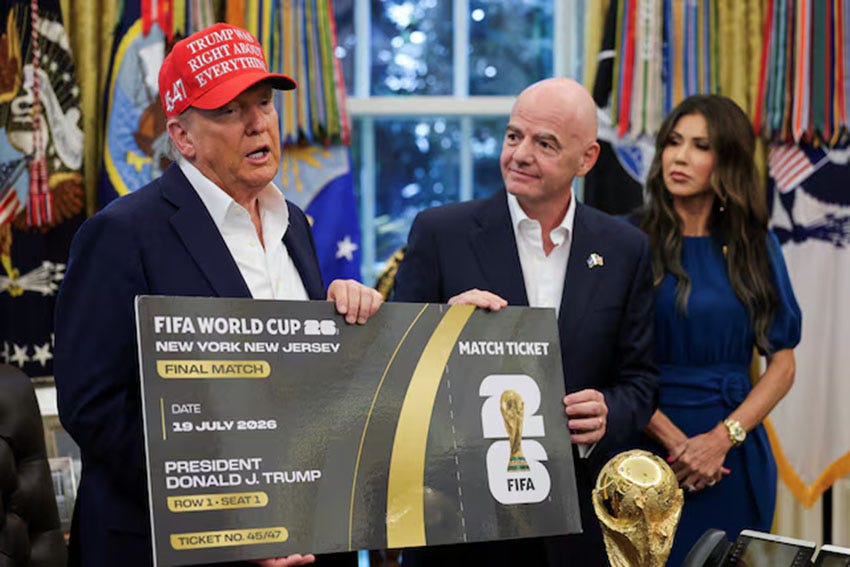
Two days before the opening ceremony of the biggest World Cup ever staged, Iran’s football federation made an announcement. Its entire fan ticket allocation for three group games on American soil had been revoked. Thousands of seats, gone, because the US government Iranian supporters wouldn’t be attending.
It is the latest chapter in a ticketing saga that had been unfolding for eight months, one that has drawn subpoenas from two American attorneys general, an investigation in Texas, a letter signed by 69 members of Congress, a formal complaint to the European Commission and a public rebuke from a sitting US president who is one of Gianni Infantino’s closest allies.
The Sports and Crime Briefing has told the whole story, from the beginning, of how FIFA, with an assist from the White House, became a tout.
The first World Cup with dynamic pricing
The 2026 World Cup is the first at which FIFA has applied variable, demand-based pricing to match tickets. The model will be familiar to anyone who has tried to buy a concert ticket in America in recent years. Prices float as demand pushes them up, and there is no ceiling.