

The veterinary inspectors moved through the holding pens at the 2026 Camel Beauty Show Festival in Al Musanaa, Oman.
What they found, spread across twenty animals entered in one of Oman’s premier camel pageants, was a catalogue of interventions that read like a consultation at a Beverly Hills cosmetic clinic.
Hyaluronic acid had been injected into the lips for maximum pendulous effect. Silicone wax had been packed into the humps to give them a volume and symmetry that nature had declined to provide. Botox had been administered to the face to relax the muscles into an expression of permanent, serene superiority. Hormonal compounds had been deployed to sculpt musculature. All twenty camels were disqualified. Their owners faced heavy fines and multi-year bans from future competitions.
The Oman Camel Racing Federation, acting under the auspices of the broader Camel Club, responded that “we are keen to halt all acts of tampering and deception in the beautification of camels.” Similar statements have been issued for the better part of a decade and have have limited impact.
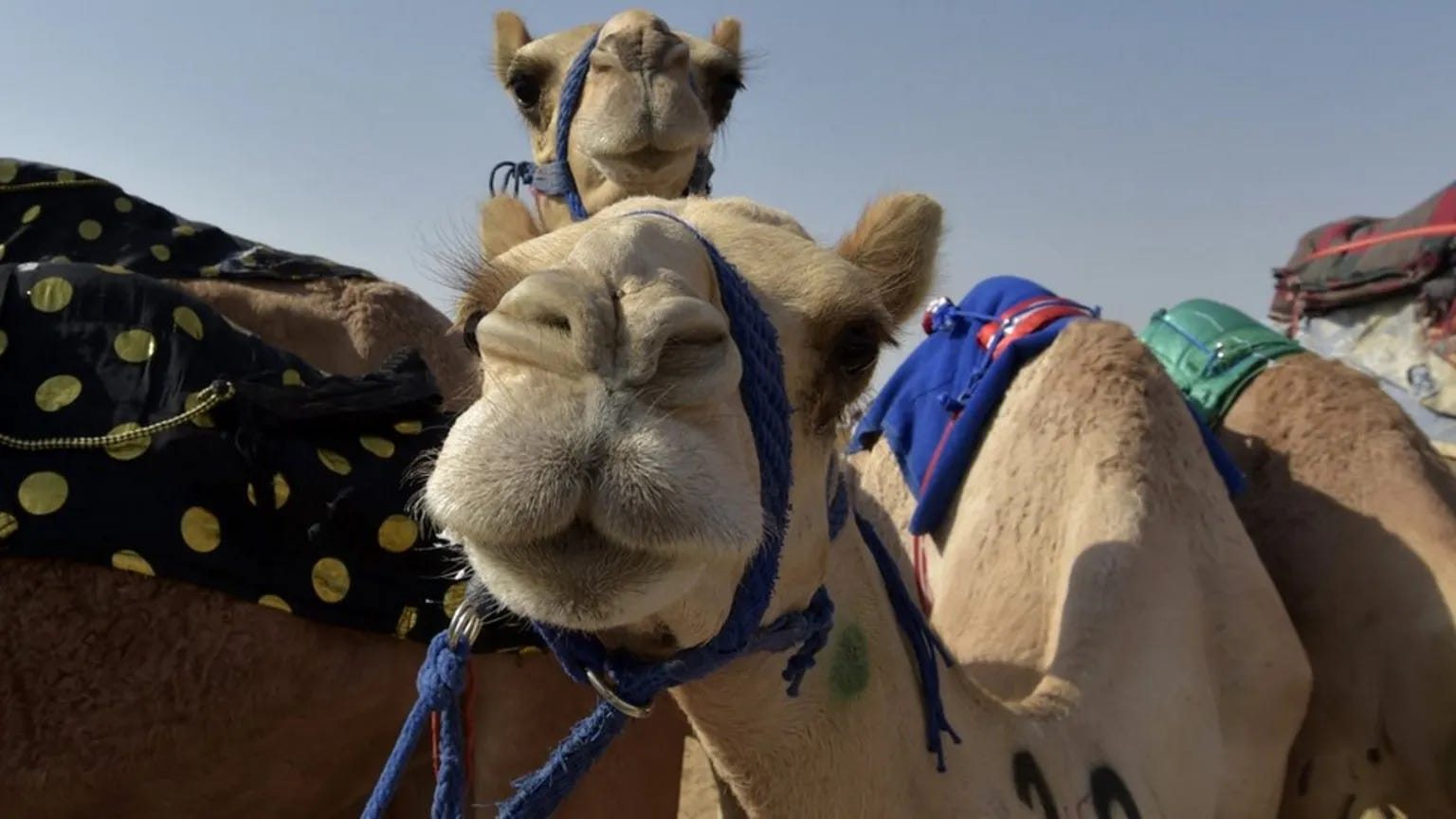
So what exactly is a camel beauty contest?
To outside observers, camel pageantry can seem like an elaborate joke. It is not. In the Gulf states, camels represent cultural heritage, social prestige, and serious money. A prize-winning camel is a statement of lineage and potential wealth. The modern competition economy has taken that tradition and turbocharged it.
